
If you’ve filed your 2025 returns or are preparing for 2026, you’ve probably noticed the game has changed. The Kenya Revenue Authority (KRA) is quietly moving away from old-school manual audits toward a much stricter, fully tech-driven system.
Starting in 2026, automated income and expense validation is now live and kicking. This means your tax returns are no longer just reviewed by humans – they’re being cross-checked in real time by KRA’s digital systems against multiple data sources.
This is one of the biggest shifts in Kenyan tax administration in years.

What’s Actually Changing?
KRA’s new automated validation engine now instantly matches every figure you declare in your income tax return against three major digital sources:
- eTIMS / TIMS electronic invoices – Only properly issued and transmitted electronic invoices will be accepted as proof of expenses or sales.
- Withholding tax data – Your declared income is cross-checked against gross amounts reported by payers (clients, banks, etc.).
- Customs and import records – Any import-related expenses or costs are verified against official entry data.
If the numbers don’t match, the system automatically flags or disallows the unsupported expense – treating it as additional profit and increasing your taxable income.
In simple terms: No valid digital proof = No deduction.
This marks a clear move from manual, sample-based audits to real-time, data-driven system audits. Fewer surprise physical audits for some, but much less room for unsupported claims or “creative accounting.”
Why KRA Is Doing This
The Authority wants to:
- Reduce human error and discretion
- Close loopholes that allowed fake or inflated expenses
- Increase revenue collection without necessarily raising tax rates
- Make compliance more objective and transparent (at least in theory)
For businesses that already run clean, fully digital records, this could eventually mean faster refunds and fewer audits.
For those still relying on cash deals, manual receipts or informal suppliers – it’s a major wake-up call.
What This Means for Your Business in 2026
- Clean digital records are now non-negotiable Every significant expense and sale needs proper eTIMS backing. Paper receipts or “friendly” invoices from non-compliant suppliers will no longer protect you.
- Unsupported expenses will be automatically rejected If KRA’s system cannot match your declared expense to a valid eTIMS invoice, withholding record or customs entry, it will likely be added back as taxable profit.
- Real-time pressure instead of year-end surprises Validation happens during or shortly after filing, meaning issues surface much faster than before.
- Higher risk for businesses with informal supply chains Many SMEs that buy from jua kali suppliers or cash-based traders are now at real risk of higher tax bills due to disallowed deductions.
Practical Steps to Protect Yourself
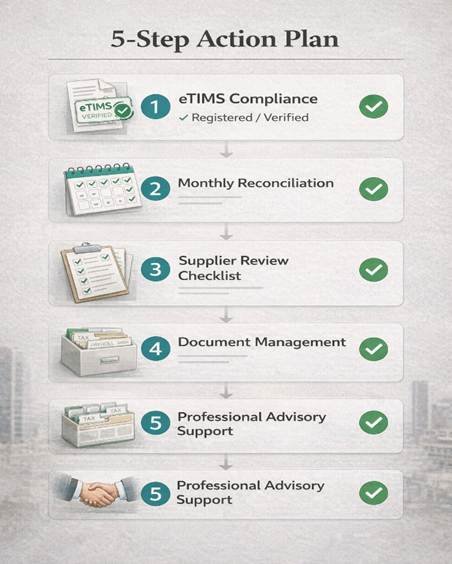
- Go full eTIMS immediately – Ensure every transaction in 2026 (sales and purchases) uses compliant electronic invoices with correct PINs.
- Reconcile monthly – Request your eTIMS and withholding summaries from your KRA account manager and match them against your books regularly.
- Vet your suppliers – Start shifting toward suppliers who are fully eTIMS compliant. It may cost slightly more, but it protects your deductions.
- Strengthen internal documentation – Keep loan agreements, board resolutions, import documents, and payment proofs ready and digitally stored.
- Get professional support early – Have a tax advisor review your setup before the next filing cycle to identify and fix gaps.
Businesses that adapt quickly to this tech-driven audit environment will face fewer shocks and lower long-term compliance costs.
Those that continue with old habits risk painful disallowances and cash flow hits – especially in an already tight economy.
At Seal Associates, we’re helping SMEs build simple, robust systems to survive and thrive under these new automated rules.
A small investment in proper setup now can save you significantly more in disallowed expenses and penalties later.
Final Thoughts
KRA’s shift to stricter, tech-driven audits is part of a broader global trend toward real-time tax compliance.
In Kenya, it means the days of “we’ll sort it during audit” are rapidly ending.
The businesses that will do well are those treating digital compliance as a core part of operations – not an afterthought.
How prepared is your business for these automated validations? Have you already faced any eTIMS-related disallowances? Share your experience in the comments – let’s learn from each other.
Stay compliant. Stay ahead.
Prepared by Seal Associates Tax Team