

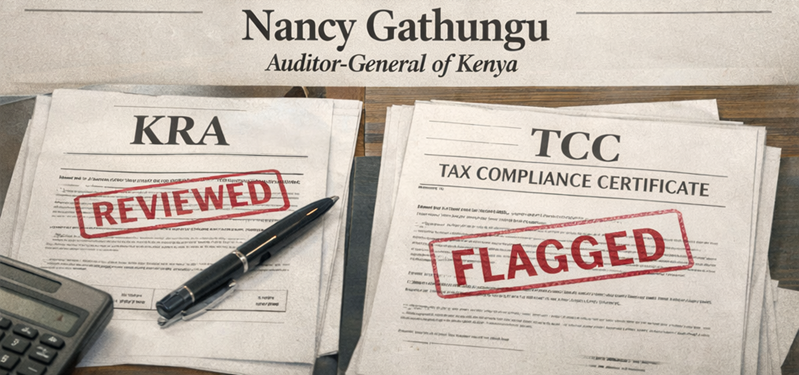
It’s April 2026 and fresh off the Auditor-General’s latest report (for the year ended June 2025), Kenya is buzzing with serious questions about the Kenya Revenue Authority (KRA). Auditor-General Nancy Gathungu has flagged two major red flags: illegal tax penalty waivers worth KSh 4.7 billion and a Tax Compliance Certificate (TCC) scandal involving over 3,000 taxpayers who owed KSh 3.12 billion but still received clean certificates.
This isn’t just bureaucratic paperwork – it strikes at the heart of fairness in Kenya’s tax system. At a time when the government is under heavy fiscal pressure and honest businesses are struggling with tight cash flows and stricter digital enforcement (eTIMS validation, automated checks), these findings raise uncomfortable questions about weak controls, possible abuse and unequal treatment.
Let’s break it down clearly so you understand what happened, why it matters to your business, and what it signals for the future.
1. Illegal Tax Waivers: KSh 4.7 Billion in Penalties Wiped Out Improperly
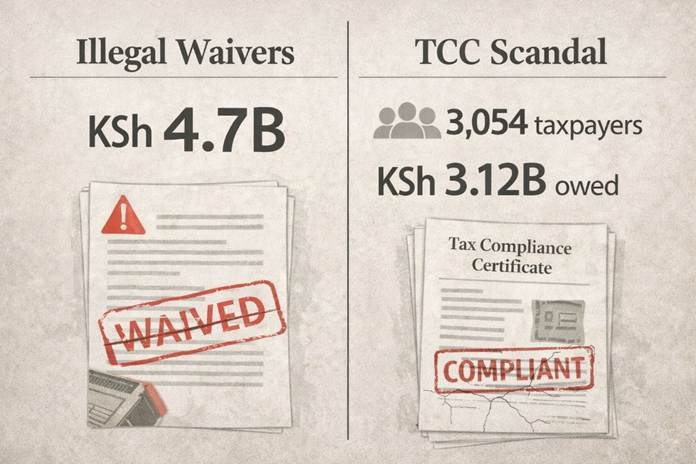
The Auditor-General found that thousands of taxpayers received penalty waivers totalling approximately KSh 4.7 billion without following the law.
Key problems flagged:
- Many beneficiaries had not paid the principal tax owed.
- Others had no approved repayment plan in place.
- Waivers were granted despite clear legal requirements under the Tax Procedures Act.
Why this is worrying:
- Kenya is already facing revenue shortfalls and high public debt pressure.
- Illegal waivers mean real revenue loss – money that could have funded roads, hospitals or security.
- It points to weak internal controls and raises uncomfortable questions about possible collusion or abuse of discretion by some officers.
When compliant businesses are being hit with automated validations and strict eTIMS rules, seeing large waivers handed out improperly feels deeply unfair.
2. The TCC Scandal: Over 3,000 Defaulters Given Clean Certificates
Even more alarming is the Tax Compliance Certificate issue.
The report reveals that 3,054 taxpayers who collectively owed KSh 3.12 billion were still issued TCCs. These certificates were granted even though:
- The taxpayers had not objected to the assessments.
- They had no approved payment plans.
- In 265 cases, certificates were auto-generated by the iTax system despite clear outstanding liabilities.
The audit only covered six out of KRA’s 43 service centres, meaning the real scale could be significantly larger.
Why TCCs matter so much:
- They are mandatory for government tenders, bank facilities, large contracts and general business credibility.
- Issuing them to defaulters undermines fair competition – honest taxpayers who pay on time lose out to those who don’t.
- It weakens overall tax enforcement and public trust in the system.
What This Means for Ordinary Kenyan Businesses
These findings come at a sensitive time. Many SMEs are already navigating:
- Weak consumer demand
- Strict eTIMS validation (disallowed expenses if no electronic invoice)
- Pressure to stay compliant just to keep their own TCC valid
When the tax authority itself appears to have enforcement gaps and possible favoritism, it breeds cynicism. Compliant businesses feel they are carrying a heavier load while others slip through the cracks.
On the positive side, the Auditor-General’s report is doing its job – exposing weaknesses so they can be fixed.
KRA has been tightening systems (AI validation, automation), but these lapses show that human oversight and internal controls still need urgent improvement.
The Bigger Picture: Rebuilding Trust in the Tax System
These audit findings highlight gaps in both.
At a time when KRA is pushing digital tools to close loopholes for ordinary businesses, internal failures like improper waivers and faulty TCC issuance undermine the entire effort.
For SMEs in Nairobi and across Kenya, the takeaway is clear: Stay vigilant and ultra-compliant. In an environment where rules are tightening but enforcement sometimes falters internally, having clean books, proper eTIMS records and up-to-date payments remains your best protection.
At Seal Associates, we help businesses strengthen their compliance systems so they aren’t caught in the crossfire – whether from automated flags or broader systemic issues.
What Should Happen Next?
KRA and the National Treasury need to:
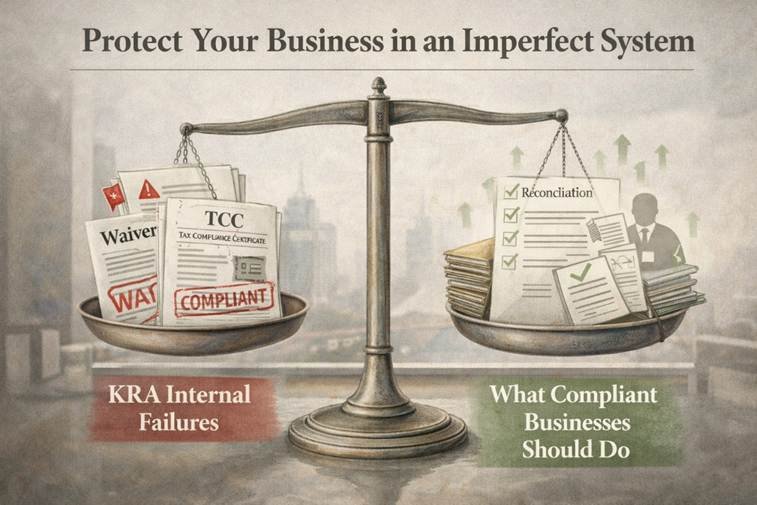
- Strengthen internal controls and oversight on waivers and TCC issuance.
- Investigate the root causes (system glitches, human discretion, or worse).
- Ensure auto-generation bugs in iTax are fixed immediately.
- Improve transparency so compliant taxpayers regain confidence.
As a business owner, use this moment to double-check your own status:
- Request your latest ledger and TCC eligibility check.
- Ensure all 2025/2026 obligations are reconciled and paid or properly objected to.
- Work with a trusted advisor to bullet-proof your records.
So, what’s your take on these Auditor-General findings?
Do they shake your trust in the system, or do you see them as necessary cleaning? Drop your thoughts in the comments – let’s discuss openly.
Strong institutions matter. When KRA gets its house in order, everyone benefits – especially the businesses playing by the rules.
Prepared by Seal Associates Tax Team