

It’s March 2026, and if you’ve ridden a matatu this week, grabbed nyama choma with friends in Eastlands, or scrolled X late at night, you’ve probably heard it: “Taxes are too high!” “KRA is squeezing us dry!” “Why should I pay when others don’t?”
The complaints are loud, emotional and everywhere. But here’s the honest truth many people won’t say out loud: a lot of us complain about taxes without fully understanding how they actually work.
That doesn’t mean the frustration is fake. It just means the conversation often starts from the wallet and the heart instead of the bigger picture. Let’s break it down like we’re chatting over a cup of chai – no jargon, just real talk.
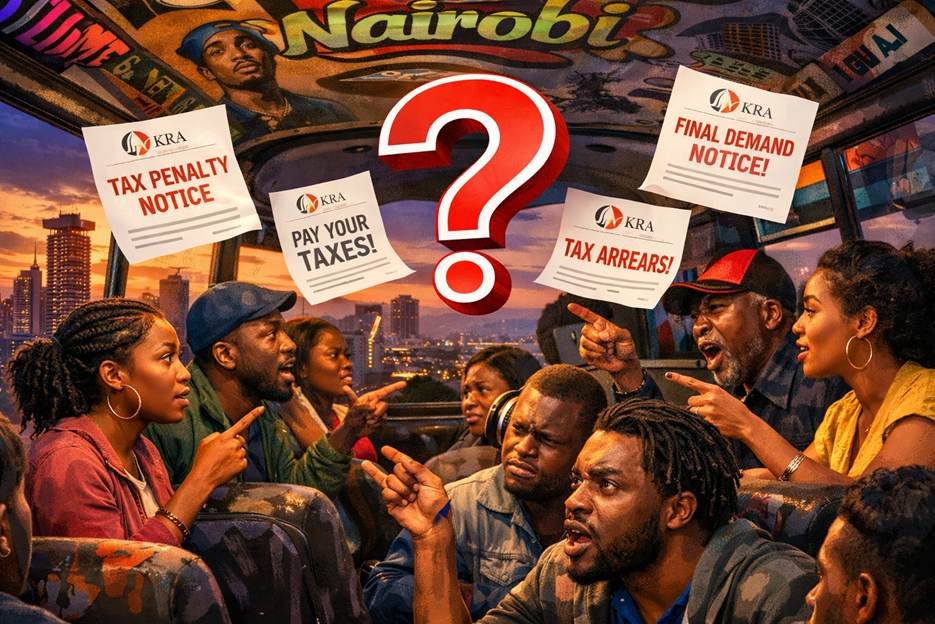
Think of Taxes Like Running a Big Kenyan Household
Imagine a family of ten siblings living in one house in Rongai or Pipeline. The house needs money for:
- Unga and food every day
- Electricity and water bills
- School fees for the younger ones
- Fixing the leaking roof
- Transport to town
Now picture only three of the ten siblings have proper jobs. Those three end up paying for almost everything. After a few months they start asking:
- “Why are we the only ones contributing?”
- “Why does it feel like we’re carrying everyone else?”
This isn’t because contributing is wrong – it’s because the load isn’t shared fairly.
That’s exactly how taxes work in Kenya. Taxes are simply the money citizens and businesses contribute so the country can run. KRA collects it and the government uses it for roads, hospitals, schools, police, electricity and water – the things we all use every single day.
What Taxes Actually Pay For in Kenya
Your PAYE, VAT and business taxes quietly fund:
- The tarmacked road you drive on every morning
- Kenyatta National Hospital when your child falls sick
- Public schools that educated millions of us
- Security that keeps our streets safer
- Water projects and rural electrification
Without taxes, these services collapse.
The problem isn’t that taxes exist – it’s how visible they feel to some people and how invisible they seem to others.
Why the Complaints Feel So Real (Even If the Details Are Fuzzy)
Here are the top reasons the frustration spreads so fast:
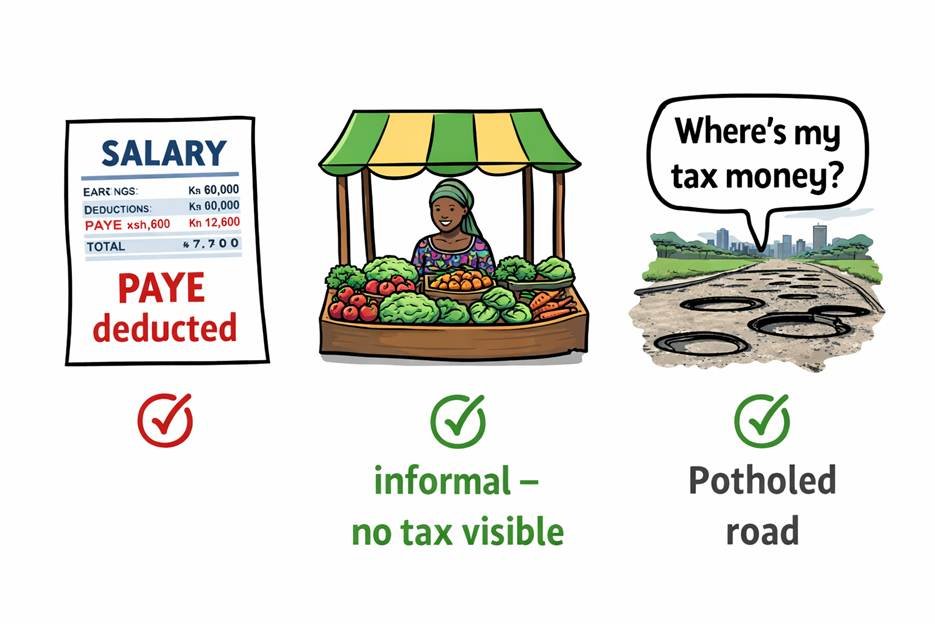
- The deduction is right in your face If you’re a salaried worker or formal business owner, PAYE and VAT hit your account or invoice every month. You feel it instantly. It hurts.
- The “others aren’t paying” feeling Kenya has a huge informal economy – mama mboga, jua kali mechanics, boda boda riders, small traders operating in cash. Many aren’t fully in the iTax system yet. When you see them thriving while your salary is already taxed at source, resentment builds fast.
- The benefits aren’t always visible. When the road is still full of potholes, hospitals are overcrowded or public schools lack desks, people naturally ask: “Where is my tax money going?” Poor service delivery makes the pain of paying feel pointless.
- Social media and groupthink One person posts “KRA is killing us!” and suddenly the whole comment section agrees – even if they don’t know the difference between PAYE and VAT. Complaints become contagious.
The Pizza (or Nyama Choma) Analogy That Makes It Click
Picture ten friends ordering a big plate of nyama choma and chips at a joint in Westlands. Everyone is excited to eat.
But when the bill comes, only three people pull out their phones to pay via M-Pesa. The other seven just keep eating.
The three who paid will eventually get frustrated – not because paying is wrong, but because the responsibility isn’t shared.
Taxes work exactly the same way. When only the formally employed and registered businesses carry most of the load while the informal sector slips through, the paying group feels the pinch the hardest.
The Conversation We Should Be Having Instead
Instead of just shouting “Taxes are too high!”, the more powerful questions are:
- Are taxes being collected fairly?
- Is everyone contributing their fair share – including the informal economy?
- Are public services actually improving because of the taxes we pay?
When we ask these questions, the discussion stops being emotional and starts becoming productive. Understanding doesn’t mean you can’t criticise – it just means your criticism can actually lead to better solutions.
Final Thoughts: Knowledge Turns Complaints Into Change
Taxes aren’t perfect in Kenya (or anywhere else), but they’re the price we pay for living in a functioning society.
The real fix isn’t wishing taxes away – it’s pushing for fairer collection, better accountability and visible results from every shilling paid.
Next time you hear someone (or catch yourself) complaining about taxes, ask gently: “Do you know exactly where the money goes?” or “What would fairer taxation look like to you?”
The conversation changes and that’s how real progress starts.
What’s one thing about taxes in Kenya that still confuses or frustrates you the most?
Drop it in the comments – let’s talk about it openly and constructively.